

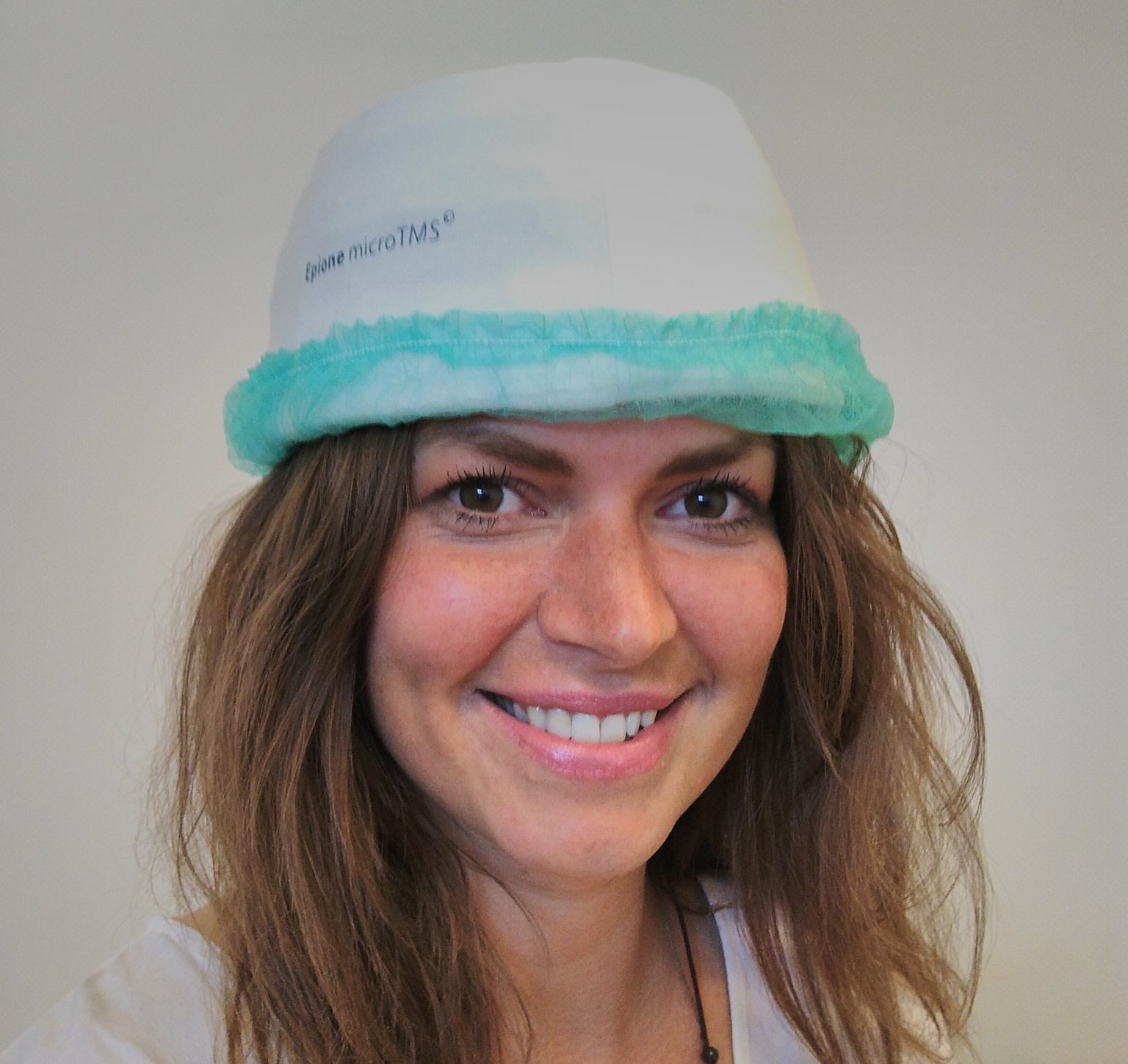
Brain injury causes many symptoms and most are difficult to treat. Magnetic brain stimulation (TMS) is a promising new treatment modality. It is safe and well tolerated. It can improve movement, vision, touch, mood, mental clarity and calmness. With our home stimulator you can treat brain damage in the comfort and safety of your own house.
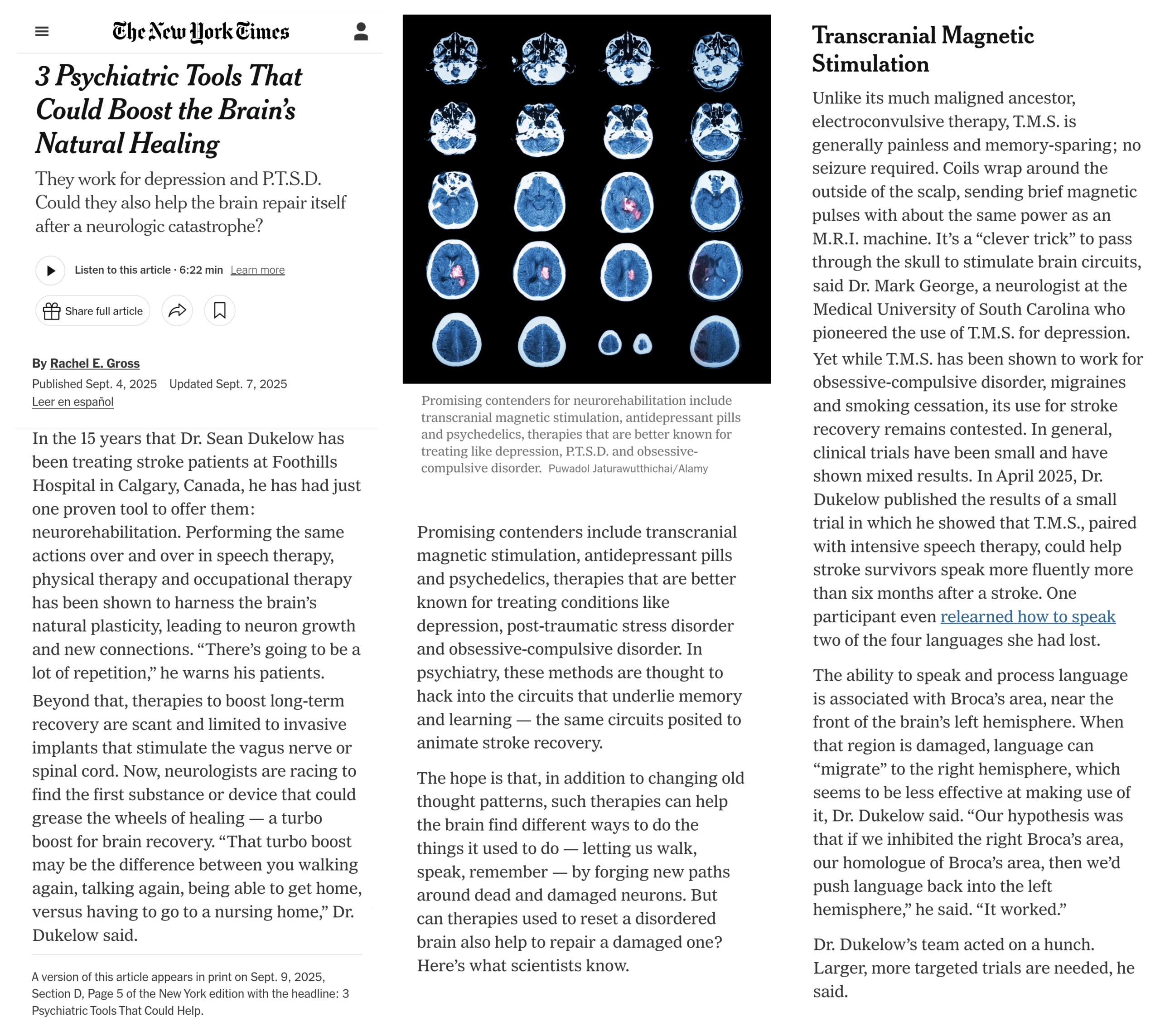
In September 2025 The New York Times published an article about stroke recovery. They called TMS a promising treatment.
What is brain injury and what causes it?
Brain damage may be caused by a stroke or an external force. The latter case is called traumatic brain injury (TBI).
The acute phase is often characterised by severe impairments:
- unconsciousness
- paralysis
- dizzyness
- (partial) loss of sight
- loss of sensation
- inability to talk (mutism)
- incomprehension of spoken word
- headache
- impulsivity, disinhibition
Then a period of recovery follows. After recovery there may be residual complaints:
- tiredness, also after a good night’s sleep
- overstimulation by light, sound and smell*
- concentration problems*
- memory problems*
- mood swings, reduced self-control*
- balance problems and dizziness
- depression
*due to impaired prefrontal cortex function
A number of residual symptoms of brain damage are similar to those of burnout, long covid and fibromyalgia.
An objective measure of brain function
A qEEG (a brain scan) clearly shows that brain damage leads to altered brain function. Loss of prefrontal beta waves is common with brain damage (as is the case with burnout). This function loss is not visible on CT or MRI scans. Below are two brain scans (qEEGs) of a young man who was the victim of excessive violence. Top row is right after injury, bottom row is after 3 months of magnetic brain stimulation. His scans before and after treatment are clearly different. The second scan is much more normal (i.e. healthier) than the first. At the time of the second scan, he is able to talk and walk properly again.

You can request a qEEG via email to R.Kortekaas (at) magnetisme.nu ; or phone/text to +31 six 29857728. We speak English, Dutch and German.
The science
New research shows that electrical brain stimulation provides immediate improvement in movement problems after brain injury. But it can also be done without brain surgery. Our self-developed brain stimulation uses pulsating magnetic fields. These promote the release of BDNF and other neurotrophic factors. These substances rejuvenate the nervous system. They protect it (neuroprotection), they promote formation of new nerve cells (neurogenesis) and new connections (synaptogenesis). It is therefore not surprising that luxury rehabilitation clinics for brain injury use magnetic brain stimulation. Brain stimulation can also be done at home.
Brain injury also leads to impaired drainage of water and waste products from the brain. That is why we also use neurodynamic therapy. In this case, this consists of manually applying rhythmic pressure to specific locations on the skull. This often has acute and spectacular effects on perception and consciousness. Patients report seeing more clearly and feeling much fitter (“as if I’ve slept for 24 hours”).
Our treatments can be combined very well with other strategies that challenge the brain, such as music lessons or practising a new sport.
With conventional methods, the greatest recovery occurs in the first year after the brain injury. But read this testimony:
A woman (KA) aged around 60 recounts
She suffered a stroke at the age of 40. Acute symptoms: paralysis on the left side, loss of strength in her legs, foot, arm and hand; delayed visual processing on the left side; impaired balance; disturbed sensitivity and altered concentration. At work, she mainly suffers from motoric typing errors because she finds it difficult to time the movement of her fingers. This makes typing very tiring. After three weeks of daily magnetic brain stimulation, she writes:
“I would like to thank you very much for allowing me to experience magnetic brain stimulation. My stroke was 20 years ago. And I am still experiencing very positive changes. There is some feeling in the “dead spot” I have on the side of my left hand; more relaxation in my neck and shoulders; it seems as if I have more feeling in my left hand and my left eye is more alert and visual processing on the left is less sluggish. I can suddenly make a fist and exert force, which I haven’t been able to do for 20 years. It’s a very moving experience. The “dead” spot on the side of my left hand is really diminishing; the overall feeling in my left hand is greater. I am very impressed. I feel that I need to help my left side less in controlling movements. Typing is easier; I normally make a lot of motor errors because I cannot time the movements of my left fingers properly; it also seems to take less energy. […] Now that it appears that improvement is possible, it is a very, very big gift.”
You can request a brain stimulation set via email to R.Kortekaas (at) magnetisme.nu or phone/text to +31 six 29857728. We speak English, Dutch and German.