

Mild magnetic brain stimulation (microTMS)
Rent a home TMS device. TMS is a common scientific term for transcranial magnetic stimulation. ‘Micro-‘ indicates a much milder magnetic field than in the more common form of rTMS. This has some big advantages over rTMS: hardly any side effects, more comfortable to undergo, the possibility to treat yourself in the comfort of your home, no need to sit still during treatment. It is proven to be effective against a broad range of symptoms but has not gained wide acceptance in the regular medical world yet.
Table of Contents
How does it work?
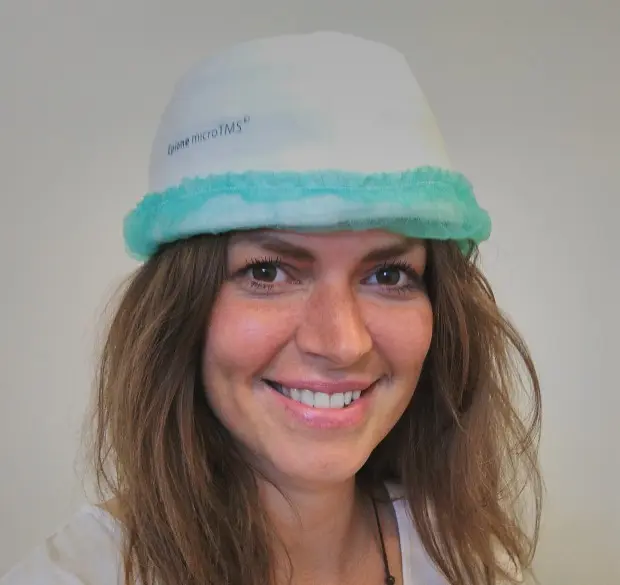
A light and comfortable cap on the head contains one or more electromagnets. The magnetic field pulsates, thereby inducing small electric currents in the brain. The currents can stimulate and entrain neuronal networks. Chemical mediators such as serotonin, dopamine and BDNF are released, influencing brain function. Autonomic sympathetic activitiy is often reduced, alpha waves can become stronger, left and right hemisphere become more synchronised. Pain, muscle tone and anxiety are reduced. Mood improves.
What conditions can be treated with microTMS?
- Addiction
- ADHD, although it cannot be ‘cured’, symptoms can be alleviated
- Anxiety
- Brain damage from stroke or trauma
- Burnout
- Chronic pain
- Dementia
- Depression
- Fatigue
- Fibromyalgia
- Headache
- Long covid
- Parkinson
- Poor sleep (insomnia)
- Restlessness
- Sleep problems
- Tinnitus
- Vertigo
- Loss of smell (anosmia)
Depression
There is good evidence that mild TMS (also known as microTMS or tPEMF) has an antidepressive action on the brain. The method is so new that it is considered an alternative or experimental treatment.
Danish researchers studied the effect of microTMS in 50 depressed patients that did not respond to medication (’therapy resistent’ patients). The results were very encouraging: after three weeks the microTMS group had improved a lot relative to the placebo group.
This Danish research is not an isolated finding. Researchers from Harvard published in 2004 and 2014 that a single microTMS treatment works as an antidepressant and better than placebo. It even works in rats and mice!
In our own studies in 50 depressed patients we found that microTMS normalises brain function as measured with fMRI.
Testimony of a man who used our home stimulator for depression
Loss of smell
What does it cost to rent a home TMS device?
Consultation in our clinic is € 105/hour. A single treatment also costs € 105. You can also rent one of our stimulators for use at home. Rent is € 105/week and we make a new custom built cap for you for € 500.
Where to go?
In our clinic in Schiedam the Netherlands you will be treated by a leading Neuroscientist (R. Kortekaas). We can measure your brainwaves (EEG), analyse an existing EEG, configure a brain stimulator for rent and send it to you.
Request your home brain stimulator here
email: R.Kortekaas (at) magnetisme.nu ; or phone/text to +31 6 29857728
We will contact you, we speak English, Dutch, Russian, Estonian and German.